Issyk-Kul National Reserve and Ch. Aitmatov Museum

One of the most popular national historical and cultural monuments of Kyrgyzstan can be found in the central part of Cholpon-Ata. Just one thousand meters away from it is the well-known Issyk-Kul Lake and the Chingiz Aitmatov cultural center of the same name.


The museum, which has been operating since the Soviet Union, has preserved almost the same furnishings. A journey into the past begins when looking at the facade of the building, built in the eighties of the last century. This image is complemented by numerous artifacts related to the life and work of the great writer.


A visit to this museum complex, which also includes a small souvenir shop, is recommended not only for Aitmatov fans, but also for history buffs. Here you can find a great many artifacts related to the peculiarities of the life of nomads, the best examples of folk art, paintings by local artists, and so on. A considerable space is given here to the hall where you can learn many interesting facts about the history of Lake Issyk-Kul.


Features of the layout of the museum complex


In order to create maximum convenience for visitors, the entire museum was divided into several thematic halls:

  • Fauna and flora of the region;
  • Items of nomads’ everyday life;
  • Legends and myths about Manas;
  • National painting;
  • Decorative and applied art;
  • Ancient numismatics;
  • Ancient tools;
  • Objects of Buddhist culture and so on.


The museum does not forget those who made a significant contribution to the social or cultural development of the country. For example, the museum complex has halls where you can learn a lot of valuable information about the heroes of the Great Patriotic War, famous poets and artists, musicians, tailors, and so on.


The museum complex has a large number of exhibits


Art historians and archaeologists note that most of the exhibition consists of documents and artifacts found as a result of numerous archaeological expeditions. For example, various tools made of stone or bronze are steadily popular with museum guests. They are believed to date back to the second century BC. They were discovered by archaeologists in the town of Salomat-Bulak.


In the next hall you can admire numerous Saka cauldrons made of bronze in the third century BC. Scientists managed to raise these artifacts directly from the depths of Lake Issyk-Kul.


Fans of ancient numismatics will be able to learn a lot in the hall, which tells about the development of commodity-money relations between people in the territory of Kyrgyzstan in different eras. It all began with special shells that served as legal tender for tribes at a primitive level of development. The pinnacle of monetary transformations are coins of their own minting, dating back to the era of the Karakhanids. Numismatists will be even more pleased with the numerous coins of other countries:

  • Tibet;
  • China;
  • Buddhist countries.


All these numerous numismatic artifacts helped scientists to draw a conclusion not only about the high level of development of trade relations in this region, but also about the importance of local currencies, recognized as legal tender by foreign merchants.


Corner of national culture and crafts


The real “highlight” of the entire complex is the hall where examples of folk art are located. For example, here you can see traditional Kyrgyz carpets or yurts. The caring hands of the museum caretakers helped, based on numerous documentary evidence, to restore the traditional Kyrgyz yurt. Entering the interior of the ancient yurt, you can see that the walls inside the room are completely covered with shirdaks and carpets made of felt.


In the immediate vicinity of the central entrance to the yurt there are numerous pillows, marking the place of the owner of the yurt. This place could also be occupied by an honorary or senior guest of the yurt. The central part of the traditional Kyrgyz yurt is a chest decorated with iron. The hostess kept kitchen utensils and various things in it.


In the central part of the yurt you can see a traditional hearth, called tyunduk. To the left of it was always the male part of the yurt, and opposite was the female half of the yurt. To separate the part of the yurt where food was stored, fabric embroidered with various patterns was used.


The national white yurt is one of the most important cultural symbols of the Kyrgyz people. It was here that a real Kyrgyz was born, grew up and grew old.


The museum has several branches


The real “highlight” of the entire complex is the hall where examples of folk art are located. For example, here you can see traditional Kyrgyz carpets or yurts. The caring hands of the museum’s caretakers helped, based on numerous documentary evidence, to restore the traditional Kyrgyz yurt. Entering the interior of the ancient yurt, you can see that the walls inside the room are completely covered with shirdaks and carpets made of felt.


In the immediate vicinity of the central entrance to the yurt there are numerous pillows, marking the place of the owner of the yurt. Also, this place could be occupied by an honorary or senior guest of the yurt. The central part of the traditional Kyrgyz yurt is a chest decorated with iron. In it, the hostess kept kitchen utensils and various things.


In the central part of the yurt you can see a traditional hearth, called tyunduk. To the left of it was always the male part of the yurt, and opposite it was the female half of the yurt. To separate the part of the yurt where food was stored, a fabric embroidered with various patterns was used.


The national white yurt is one of the most important cultural symbols of the Kyrgyz people. It was here that a real Kyrgyz was born, grew up and grew old.


The museum has several branches


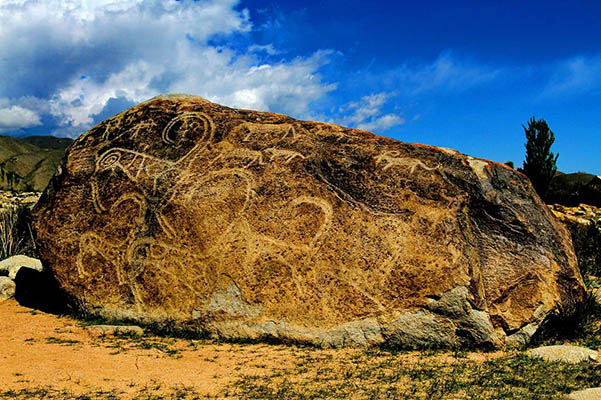
The continuation of the extensive exhibition can be found in the open air. A specialized petroglyph museum is located near the settlement of Kara-Oi. This museum is an official branch of the museum located in Cholponat. The vast territory of the complex includes numerous images of local fauna, made on the rocks. Here you can also see numerous drawings from the lives of local residents:

  • Sacred actions;
  • Hunting;
  • People in everyday life and so on.


If you want to see the entire exhibition, then you will have to go through many nearby settlements:

  • Tora-Aytyr;
  • Chirpykta;
  • Bosteri;
  • Ananyevo;
  • Korumdu.


The total collection of this museum complex, which includes many boulders with drawings and artifacts, exceeds fifteen thousand units.