Tourism Armenia

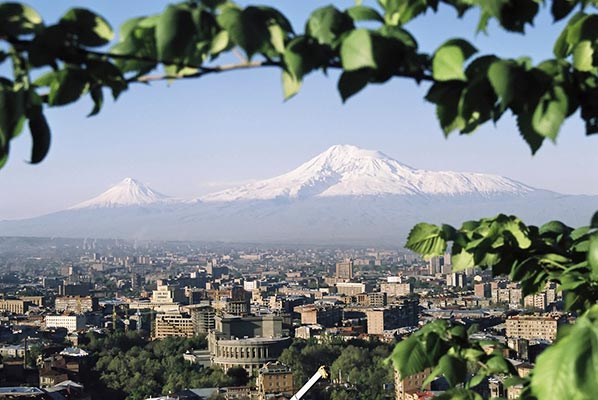
Armenia is an ancient country with a four-thousand-year history. The capital of Armenia is Yerevan. Year after year, Armenia attracts more and more tourists from all over the world. Armenia is located in the southern part of Transcaucasia. Most of the territory of Armenia is occupied by steppes and mountains. The territory of Armenia is called a “landscape complex”. A distance of 30 km separates the Ararat plain from the top of Aragats, representing a string of semi-deserts, dry and mountain steppes, arid groves, subalpine and alpine meadows. In Armenia, there are a number of wildlife sanctuaries, the Dilijan and Khosrov reserves and the Sevan National Park.


It is not for nothing that Armenia is called an open-air museum, there are more than 4 thousand architectural structures. These include unique ancient monuments: the Garni fortress (3rd-2nd centuries BC), the pagan Temple of the Sun (1st century AD), the churches of Echmiadzin (4th century), Hripsime, Mastara (7th century), the three-tiered Zvartnots temple (7th century), the patriarchal palaces in Dvin (5th-6th centuries) and Arucha (7th century), the pearl of medieval times Geghard (4th-13th centuries), the monastic ensembles of Sevan (9th century), Tatev, Sanahin, Haghpat.


An interesting fact is that Armenia was the first of the ancient states of the Caucasus to adopt Christianity as a state religion in 301.


From ancient times until the beginning of the 20th century, the lands of Armenia from the 7th century BC. start from the Kura to the Tigris, Euphrates, and Lake Urmia. The end of the 6th century BC in the history of Armenia is notable for the rule of the satrapy of the Persian Empire.


After the empire of Alexander the Great disintegrated, the Ayrarat kingdom and Sophene arose, later conquered by the Seleucids. After the destruction of the last Romans at the beginning of the 2nd century BC, three Armenian kingdoms arose: Greater Armenia, Lesser Armenia and Sophene.


During the reign of Tigran II, Greater Armenia turned into a huge empire, originating from Palestine and reaching the Caspian Sea. But the empire of Tigran was defeated and conquered by the Romans, except for Greater Armenia. Later, Greater Armenia fell into Roman-Parthian dependence. In 387, Greater Armenia was divided into 2 parts – its main part went to Persia, the smaller one – to Rome, later the territory of Armenia was conquered by the Arabs. The end of the 8th century is known for the restoration of Armenian statehood, the Bagratid Kingdom and the Vaspurakan Principality appeared. In the 11th century, Armenia was conquered by the Seljuk Turks. But Cilicia managed to preserve Armenian statehood until 1375. After the Seljuk viceroyalty and the invasions of the Mongols and Tamerlane, most of the territory of Armenia was occupied by Turkic nomadic tribes. In the 16th-17th centuries, Armenia was divided between the Ottoman Empire and Iran.


In May 1918, an independent Armenian Republic was created on the territory of Armenia occupied by the Russian population. In 1918, Armenia won the war with the Turks. But two years later, in a new Armenian-Turkish war, Armenia was defeated by the Turks.


For 17 centuries, the basis of cultural and moral development was the religion and faith of the people, which positively influenced the formation of the thinking of Armenians. Hardworking, devoted, and most importantly hospitable people live in Armenia. Armenians are distinguished by their temperament, good nature, musicality and understanding of humor.


Armenia is famous for its national wind instrument – the duduk, khachkars, which are recognized by the World Organization UNESCO as a national heritage of all mankind, unique ancient manuscripts Magahat, ruins of monasteries and churches, located in the fog of the slopes of inaccessible cliffs.


Armenians are great lovers of food. It is impossible to imagine the Armenian people without national Armenian cuisine. Armenian cuisine has its own history, dating back to the 8th century BC. This cuisine has preserved its ancient recipes to this day.


A characteristic feature of the Armenian people is considered to be feasts of a friendly family or company, where pressing issues are resolved and discussed. Armenians are a family people, they love children very much.


Armenia is a country of long-livers, thanks to natural conditions, clean air, natural food, abundance of wines.


Come to Armenia and enjoy what you see and hear.